THE YELLOW WASH JOURNAL · CONDO & COMMERCIAL
Fall or Spring Parkade Cleaning: Which Timing Makes Sense for Your Building?
A practical guide for Halifax condo boards and property managers: choosing a cleaning window, understanding the full scope, and keeping collected mud out of drains.

Spring is a useful starting point when winter residue is the main problem. Fall makes sense when the parkade already needs a reset before winter. Neither season is automatically right for every building. Choose around the condition of the surfaces, exposure to weather, vehicle access and the time needed to complete the work safely.
Fall or spring? Start with what is on the floor
For a Halifax, Dartmouth or Bedford building, the most useful question is: what are we trying to remove, and when can we reach the whole parkade? A calendar date alone will not answer that. Walk the parking bays, lanes, ramp edges, wall bases and areas around columns before setting the cleaning window.
Halifax uses salt and brine during winter operations. [1] That local context makes a post-winter inspection worthwhile. If vehicles have brought in gritty residue and dirty meltwater, spring is a sensible time to assess a full clean. If significant buildup is already present in autumn, waiting several more months may not suit the building.
| Cleaning window | When it makes sense | What to check first |
|---|---|---|
| Spring | The priority is cleaning up the residue left after winter use. | Has the main period of tracking winter material into the building passed? Inspect sheltered corners as well as driving lanes. |
| Fall | The parkade already has accumulated dirt or mud, or you want to address summer traffic and recent work before winter. | Check ramps, entrances, current buildup and a suitable weather window for exposed areas. |
| Another time—or more than one visit | Traffic, a specific incident or ongoing work means the building needs attention outside a seasonal schedule. | Base the scope and timing on the actual condition. Do not automatically book two full cleans when one would meet the need. |
For an open-air structure or exposed ramp, weather and surface conditions matter directly. Underground parking may be more sheltered, but entrances, ventilation, water recovery and reopening still need a plan. Set the date after those details are reviewed, rather than promising a fixed drying time.
What is included in Yellow Wash parkade cleaning?
Our parkade cleaning covers all concrete or asphalt floor areas, all columns and all walls within the agreed parkade work area. The aim is a complete surface clean, including edges and corners—not just a pass through the centre driving lane. Vehicles and stored items must be moved so we can reach the included surfaces.
The complete included surfaces are highlighted. We collect mud and loosened solids instead of letting them go down the drains.
- All concrete/asphalt: parking bays, driving lanes and the floor around columns and along walls. Confirm the included levels, ramps and connecting areas on the quote.
- All columns: accessible faces around each column, including the bases where buildup collects.
- All walls: accessible wall surfaces throughout the agreed area. Surface materials, coatings and condition guide the cleaning method.
- Mud collection: we collect the mud and loosened solids rather than letting them go down into the drains.
Identify any damaged coatings, loose paint, electrical equipment or areas that need special access during the walkthrough. Specialist stain removal, coating repairs, drain-line cleaning and interceptor servicing should be separately identified if required. The scope above does not make every stain removable or include those additional services automatically.
See the difference on a real parkade floor

Look beyond the centre of the lane
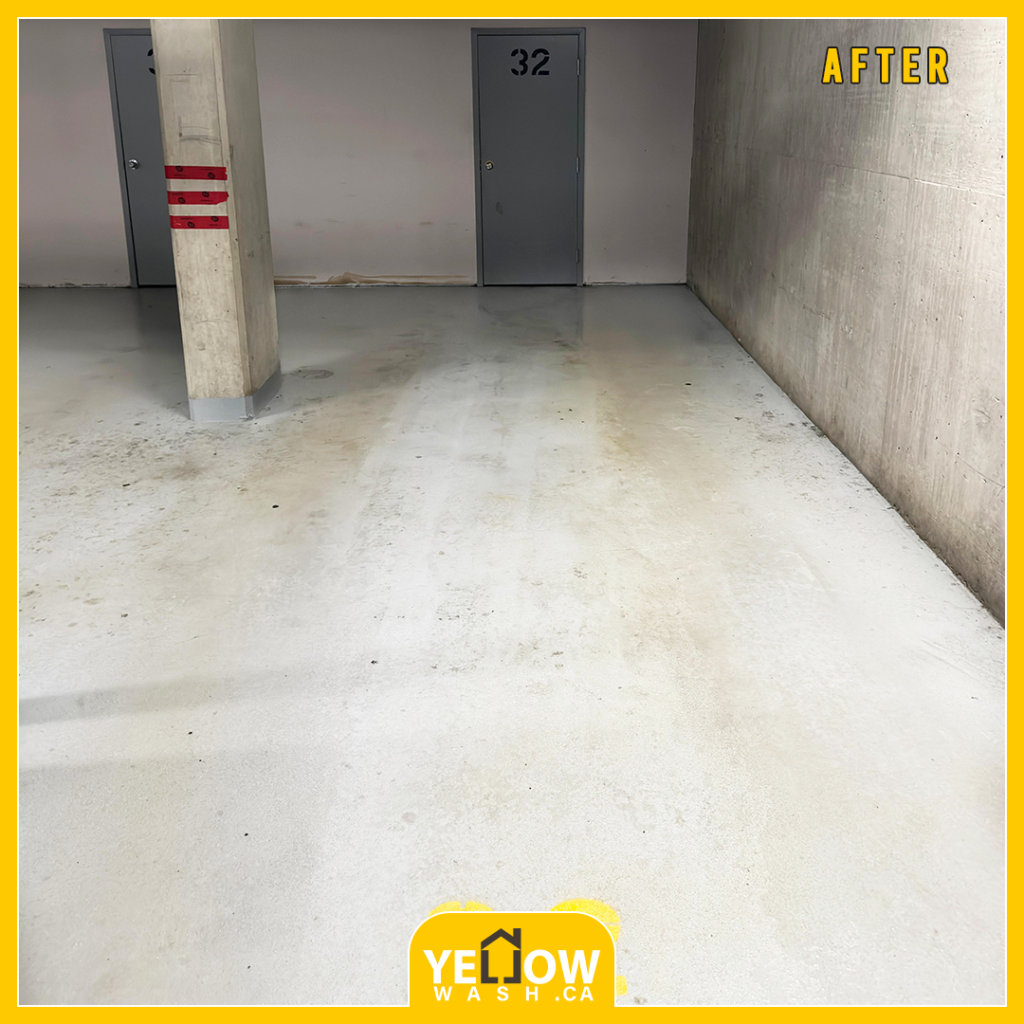
This Yellow Wash comparison shows the same parking area before and after cleaning. Move the slider to inspect the floor around the column and along the wall.
The reduction in dark surface buildup is visible, and some marks remain. Results depend on the surface and the material being removed. This floor comparison illustrates cleaning results; it does not establish that every wall or column in this particular job was cleaned.
See our commercial parkade cleaning service for more about the work.
The mud is collected—not pushed into the drains
We do not use the parkade drains as a disposal route for mud. We collect the mud and loosened solids during cleaning. Removing buildup from the floor should not simply move that material into the drainage system.
Before work starts, the building and cleaning team should confirm the drain locations, collection arrangements and the appropriate handling of recovered material and wash water. Collecting solids does not, by itself, make the remaining water suitable for any drain.
Halifax Water identifies parking garages among the locations where oil can enter its system, and explains that street catchbasins belong to the stormwater system. [2] Its industrial pretreatment guidance also points businesses to wastewater, stormwater and pretreatment requirements. [3] The appropriate handling plan depends on the site and the material collected.
A short checklist before choosing the date
- Walk the entire area. Photograph the floor, wall bases, columns, ramp and any unusually heavy stains. Note the surface type and previous coatings.
- Define the boundaries. List every level, lane, bay, wall and column included. Identify spaces that need unlocking or a separate visit.
- Plan vehicle moves. Agree on a full closure or staged sections, parking alternatives, resident notice and a contact for vehicles left behind.
- Confirm collection and access. Review mud collection, wash-water handling, water access, equipment routes and any height restrictions.
- Agree on reopening. Establish who checks the work area and authorizes vehicle and pedestrian access once conditions are suitable.
If this is part of a wider annual plan, our condo cleaning budget guide can help you define the work. For occupant communication, use the practical points in our cleaning notice guide.
Plan the right parkade cleaning window
Send Yellow Wash your Halifax/HRM property address, approximate area or parking-space count, number of levels, surface types and current photos. Let us know whether you are considering fall, spring or another date, and whether vehicles can be moved in stages. We will review the cleaning scope and access plan with you.