THE YELLOW WASH GUIDE
Why Is Moss Still on My Roof After Treatment?
A visual guide to heavy moss, low-pressure treatment and the gradual changes that follow on asphalt-shingle roofs in Halifax and HRM.
THE SHORT ANSWER
Moss can remain attached after roof treatment because treating the growth and clearing it from the shingles happen at different speeds. The remaining moss may turn white or pale, dry out and gradually break away. A roof can continue improving over the following weeks, but a completely clean appearance within a few weeks is not a reliable promise.
If you have just had your Halifax roof treated, seeing moss the next morning does not automatically mean the service failed. Look for a change in colour, volume and coverage over time, and use the follow-up plan agreed with your contractor.
Yellow Wash’s roof cleaning and treatment service uses low-pressure application and explains that treated moss turns white, dries, crumbles and gradually falls away. This guide shows that progression on an asphalt-shingle roof. Cedar, metal, tile and other roof systems need their own care instructions.
What roof moss treatment can look like
The sequence below illustrates the treatment stages on an example roof. Preparation, colour changes and clearing time vary with the roof and treatment.
STAGE 01
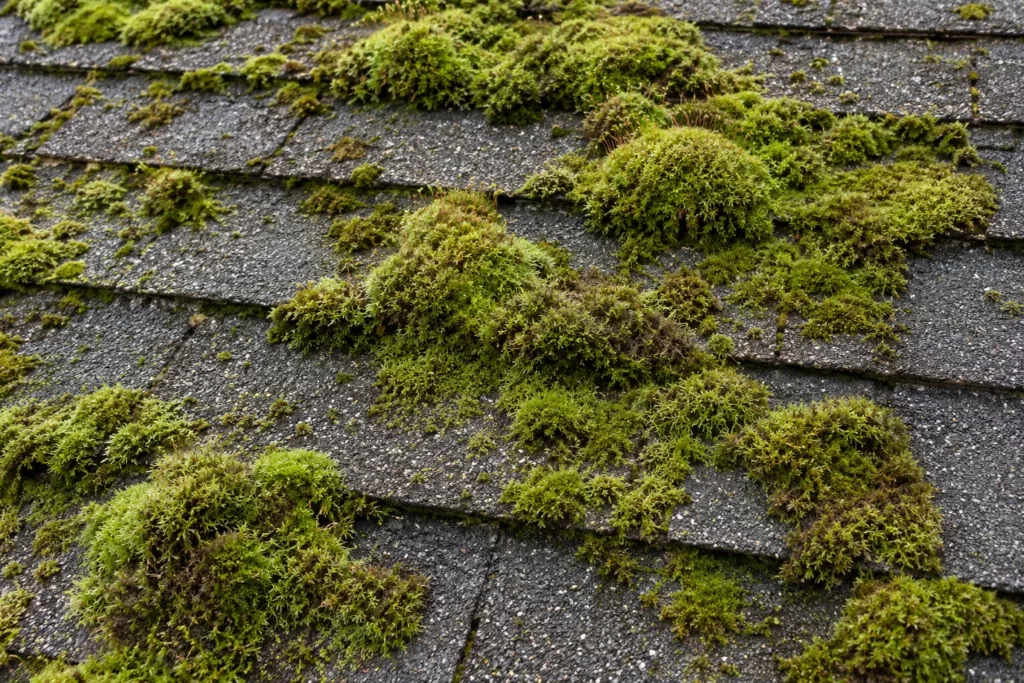
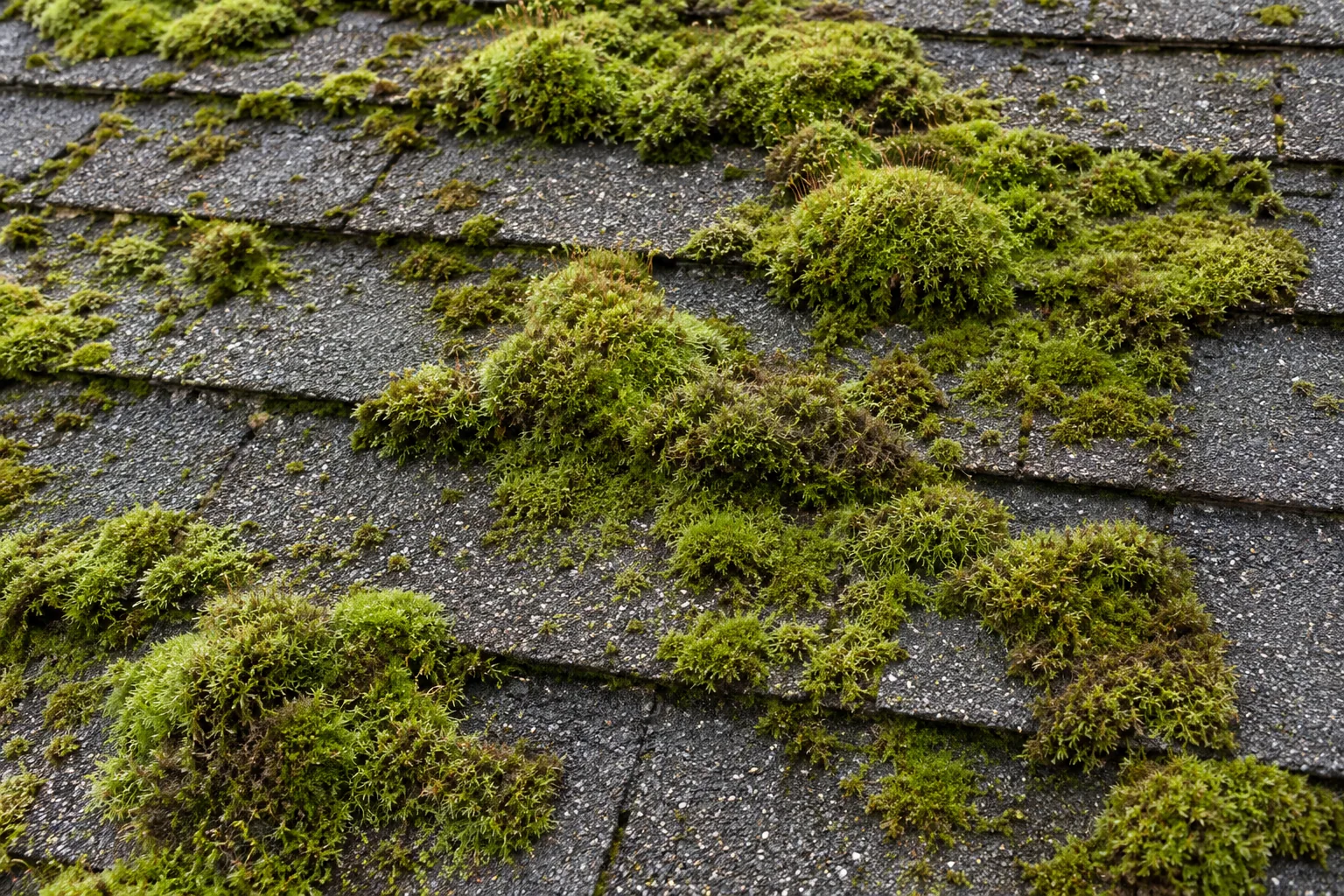
Heavy green moss before treatment
Thick cushions collect along shingle overlaps, hiding more of the roof than a thin surface film would. An assessment should establish the roofing material, condition, access and extent of the growth before deciding how to clean it.
Take a wide photo from the ground and note the affected side of the house. Avoid climbing onto the roof for a closer look. CertainTeed recommends professional cleaning when it is needed. [3]
STAGE 02
Large loose clumps removed where appropriate
For a roof where the agreed method includes bulk removal, the largest loose pieces are carefully reduced first. Thin, firmly attached growth can remain; stripping every trace away immediately is not the goal of this preparation stage.
This step depends on the shingle manufacturer and the roof’s condition. It is not an instruction to scrape, lift shingle edges or brush aggressively. Some roofs should be treated before any further removal. [3]
STAGE 03
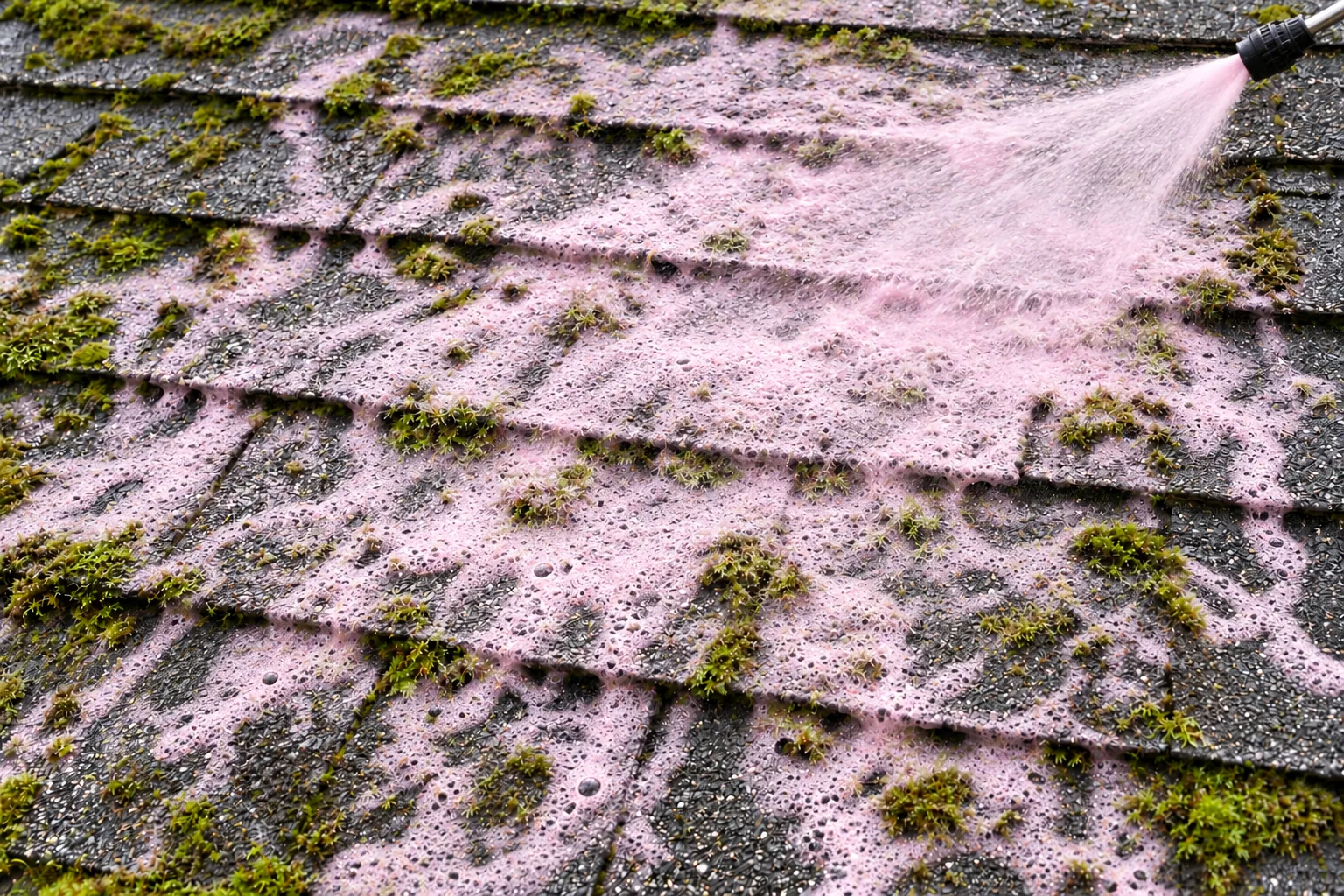
Low-pressure treatment reaches the remaining growth
The pink foamy application shown here illustrates the treatment stage. Yellow Wash uses a low-pressure roof-treatment approach; the solution, application and any required rinsing must suit the particular roofing material and product directions.
Foam colour and thickness are not a test of effectiveness. Confirm landscaping protection, water handling and aftercare before the visit. Do not add another cleaner or rinse the roof yourself to speed things up.
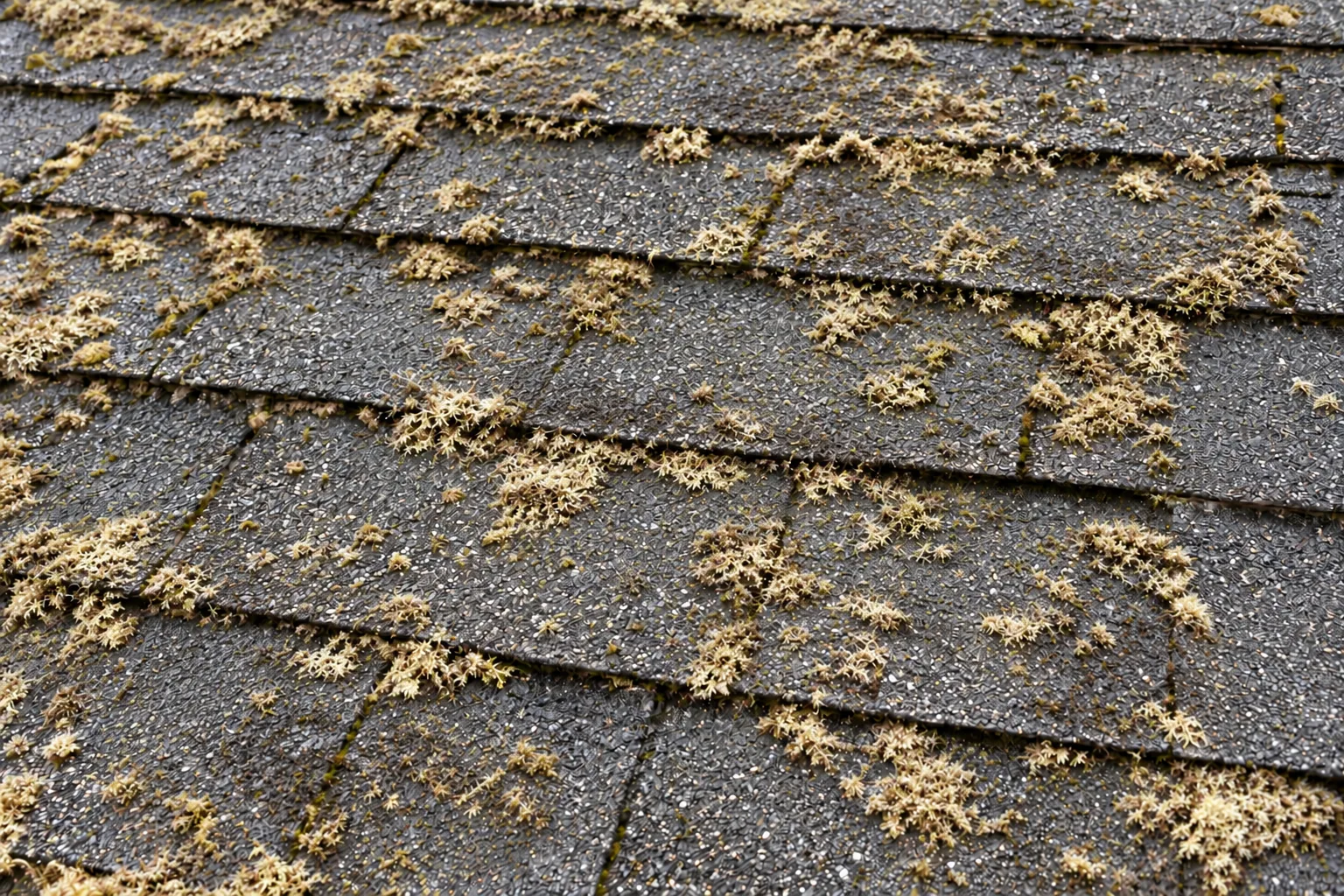
STAGE 04
Green moss becomes pale or white
After treatment, moss can lose its green appearance while still sitting on the shingles. Yellow Wash describes a white stage before the material dries and crumbles. Depending on the growth and treatment, the appearance may be patchy rather than uniform.
A pale patch alone cannot prove that every part has been treated successfully. Compare dated photos from the same viewpoint and ask about areas that remain green at the agreed review point.
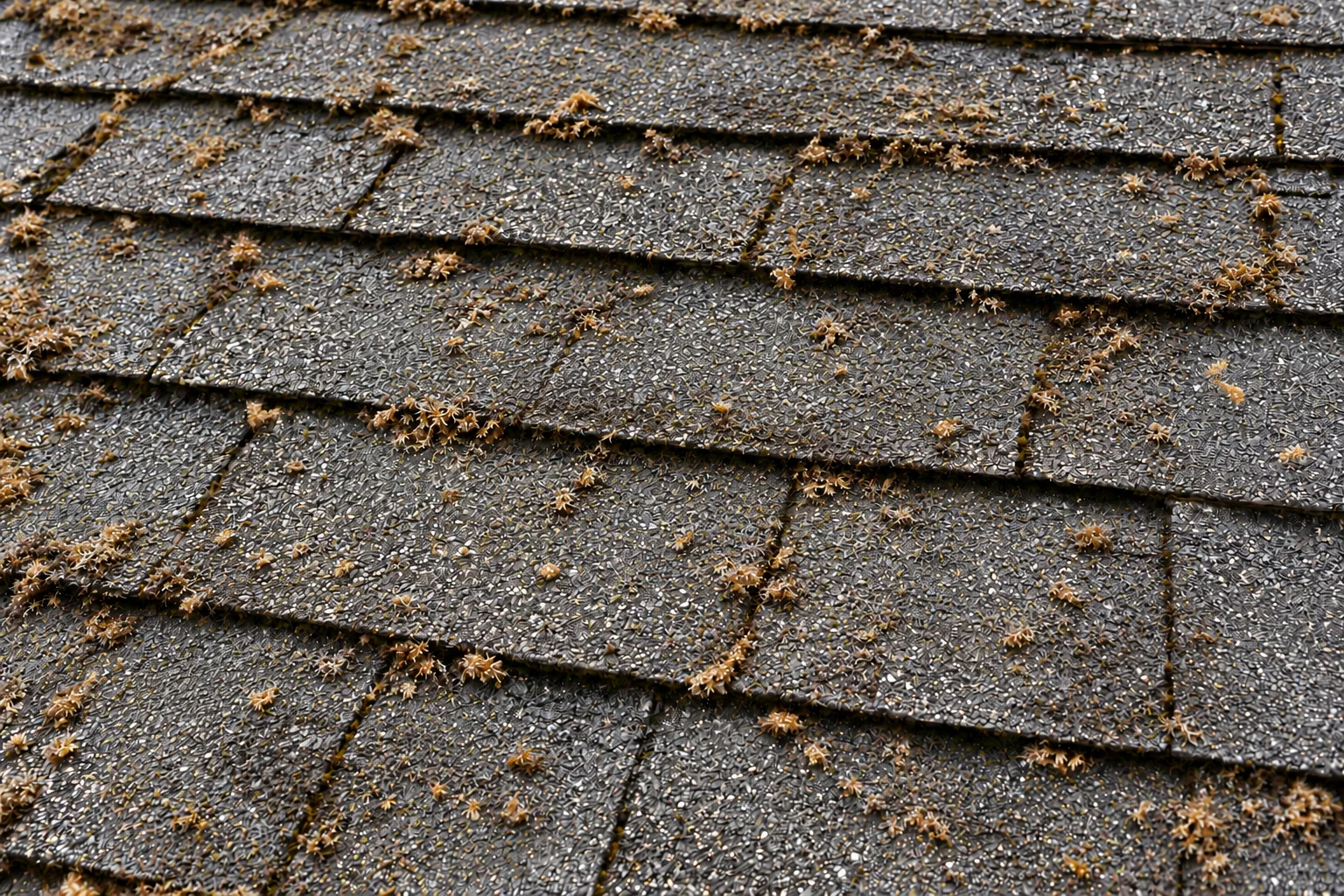
STAGE 05
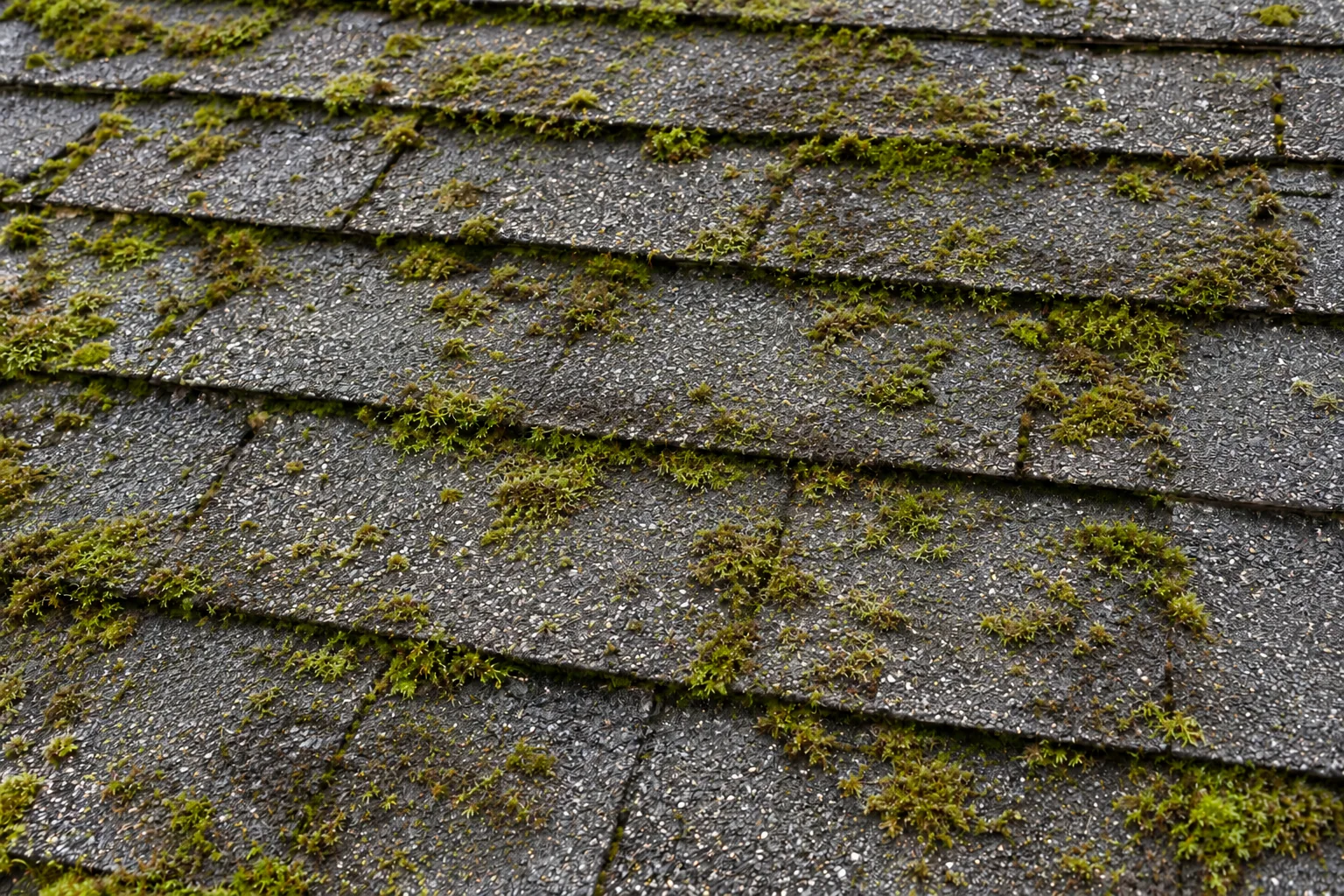
Dry moss becomes brittle and loosens
As treated material dries, it can become brittle and break into smaller pieces. Weathering can gradually carry loose material away; some patches remain attached longer than others.
ARMA explains that moss loosens over time and severe growth can need more than one treatment. Do not pressure-wash an asphalt roof to force an instant result: its guidance warns of granule loss. [1]
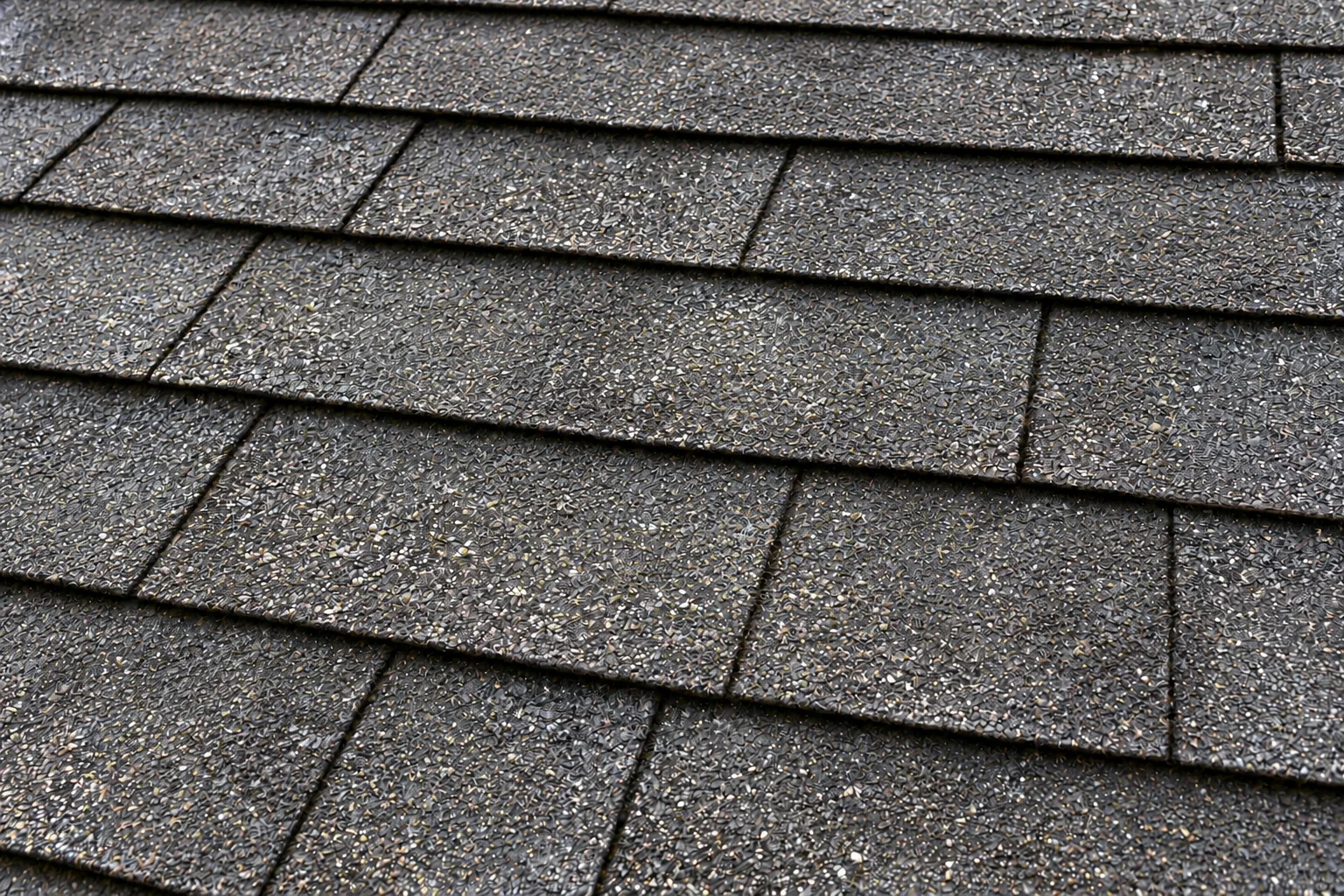
STAGE 06
More of the original roof becomes visible
The final illustration shows the intended moss-free appearance after the remaining material has cleared. The same shingles retain their age, texture and natural colour variation. Cleaning does not replace worn granules or repair damaged roofing.
This is an example end stage, not a dated result. Your roof may need more time or a follow-up treatment to reach the agreed outcome.
What do rain, sunshine and wind actually do?
The useful distinction is chemical treatment versus physical weathering. Treatment addresses the growth. Later wetting and drying can help weather the remaining material; sun and airflow support drying, and rain or wind can carry away loose fragments. This is gradual shedding, not a reason to expect one storm to clear the whole roof.
“Rain reactivates the treatment” is product-specific. Some leave-on products are designed to work with weather over time. For example, Wet & Forget describes that behaviour for its own formulation. That does not establish how a different roof solution works, and pink foam does not identify the chemistry. [4]
Follow the directions for the treatment actually applied. The required dry weather, contact time and rinsing instructions should come from that product and the roofing manufacturer. Rain arriving too soon should be discussed with the contractor rather than assumed to help.
How long until the roof looks clean?
Expect a progression rather than a fixed day. Early changes and a cleaner appearance may develop over the following weeks, while stubborn material can take longer. GAF notes that moss loosens over time and a professional may need to return for another treatment. [2]
For a Halifax, Dartmouth or Bedford property, ask for an estimate based on your own roof’s growth, shade, drainage, exposure and condition. In autumn, also agree how weather and safe access affect treatment and follow-up. The calendar month alone does not set the clearing time.
- Before booking: ask what bulk removal, treatment and follow-up are included.
- After application: record the service date and keep the contractor’s aftercare instructions.
- At the agreed review point: compare the same roof areas using photos taken in similar light and dry conditions.
What should you watch for after treatment?
Use this table for your follow-up conversation. Observe from the ground; a photograph helps track change but cannot diagnose the roof. On a small screen, swipe the table sideways.
| What you notice | Useful next step |
|---|---|
| Pale or white moss still attached | Record whether coverage and bulk are reducing. Continue the agreed monitoring plan rather than pulling it off. |
| Green patches at the review date | Send a wide photo and a zoomed view. Ask whether more time, reassessment or another treatment is needed. |
| Loose debris collecting near the gutter | Ask about a safe debris and drainage check. Confirm whether this work is included in the original scope. |
| A leak, broken shingles or new roof damage | Contact a roofing professional promptly. Do not wait for moss to clear before investigating a building problem. |
| An appearance that is not changing | Share the treatment date and photo record with the contractor. Avoid adding chemicals or aggressive cleaning. |
For longer-term care, arrange appropriate branch and debris management and keep drainage working. ARMA identifies shade and retained moisture as conditions that support moss, and recommends routine debris and gutter care. [1]
If you are comparing services, our soft washing versus pressure washing guide explains why the material matters. For roof work, request the roof-specific scope rather than assuming a house wash includes the shingles.
Ask Yellow Wash about your roof
Send your Halifax or HRM address, ground-level photos and any known roof concerns. Use the custom quote option and select roof cleaning so we can review height, access, growth and the appropriate treatment scope. Already had a treatment? Include the service date and what has changed.