THE YELLOW WASH GUIDE
Why Is My Siding Still Chalky After Washing? Dirt vs. Oxidation Explained
Chalky siding is not always dirty siding. Understand pre-existing oxidation, why gentle cleaning matters, and when the finish needs more than a wash.

Weathering-related oxidation is a pre-existing surface condition, not something created by our normal house-wash process. Removing dirt can make that existing chalkiness easier to see. Yellow Wash uses a dedicated 12V soft-wash system on siding to reduce the risk of disturbing a weathered finish, rather than blasting it with a pressure washer.
Low pressure is a precaution, not a guarantee: a fragile finish still needs assessment, suitable chemistry and careful handling.
Dirt comes off. Weathering is different.
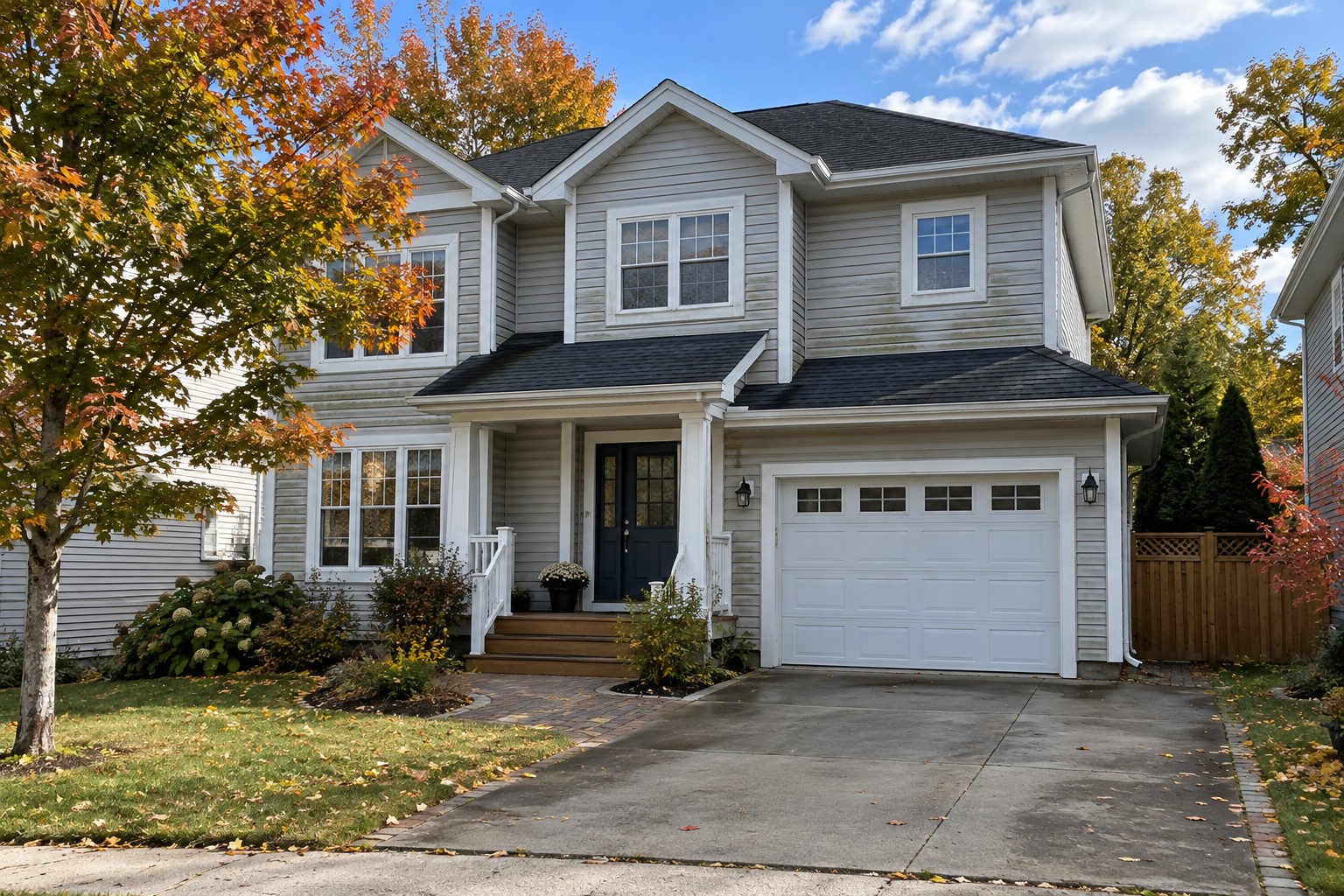
If your Halifax home looks cleaner after washing but still feels powdery or looks faded, another wash may not be the answer. In exterior cleaning, “oxidation” often describes a chalky, weathered surface. Painted metal, vinyl and other finishes do not all deteriorate in exactly the same way; the material and coating matter.
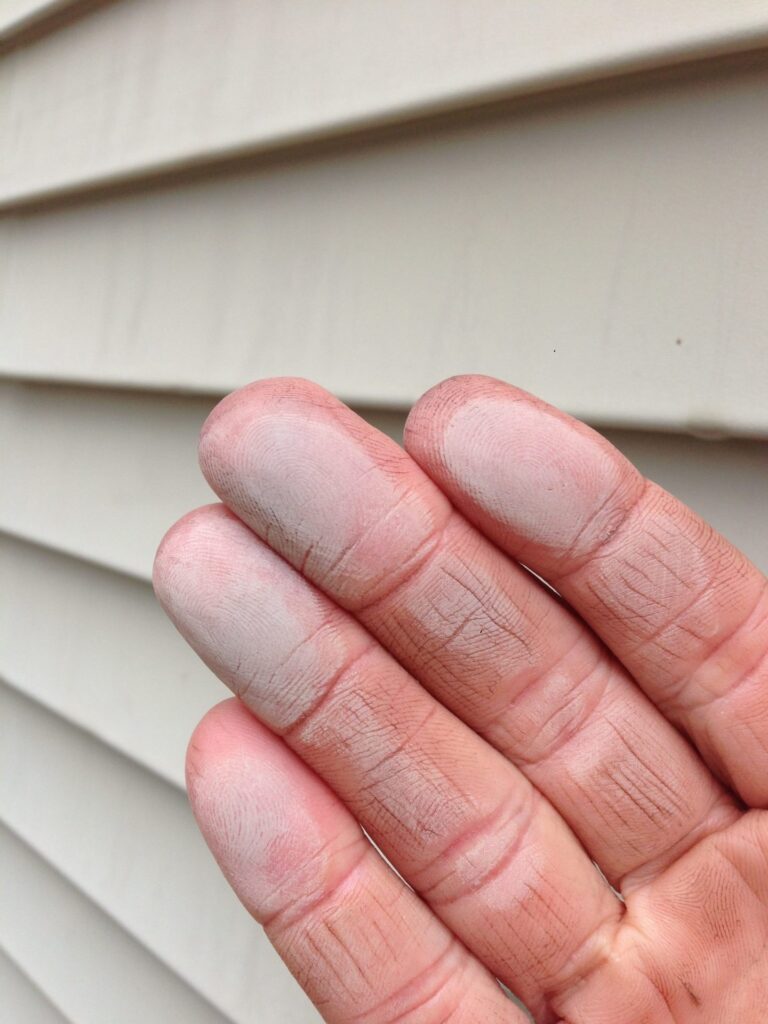
Sherwin-Williams describes paint chalking as powder produced as the finish weathers. Its coating research explains how ultraviolet light degrades the surface resin, allowing pigment to lose its attachment. That is different from loose dirt sitting on an otherwise sound finish. [1] [2]
| What you notice | What it may mean | What to do next |
|---|---|---|
| Loose dust, dirt or green growth | Surface contamination; it can coexist with chalking. | Arrange a material-appropriate maintenance wash. |
| Powdery residue and a dull finish | Possible weathering/chalking, not simply missed dirt. | Check the material and assess the finish before scrubbing. |
| New lines, gloss changes or patches | Uneven residue removal, deposits or actual finish damage. | Stop further spot-cleaning and investigate; do not assume the cause. |
A photo or white mark alone is not a diagnosis. Dried cleaner, mineral deposits, coating failure and corrosion can require different treatment. Pre-existing oxidation and cleaning-related damage are separate questions. If a new mark appears, it deserves inspection rather than automatically being dismissed as oxidation.
Why a clean wall can still look chalky
Removing dirt can reveal the pale, weathered finish already underneath. A maintenance wash does not rebuild its original colour or gloss.
If rubbing or a concentrated spray removes loose weathered material unevenly, the treated areas can contrast with neighbouring areas. Chasing each patch with more force can make the appearance less uniform.
A small check beats a big test patch
Chalk transfer is used in formal coating assessments, but a homeowner’s wipe is only a clue, not a laboratory diagnosis. [2] Photograph the dry surface first. If the manufacturer permits it and the finish is sound, a professional can make a very light check with a soft cloth in one hidden, reachable spot. Avoid broad finger swipes across the front of the house: even a test may leave a visible contrast. Do not rub peeling or unknown older paint; arrange an assessment instead.
It is not just siding: frames, gutters and trim

Window frames & door framing
The frame is not the same surface as the glass. A painted or coated frame may chalk even when the pane cleans well. Bare-metal corrosion and mineral marks are different again. Do not apply a siding oxidation remover to window frames, seals or glass without specific product approval.
Pella recommends avoiding power washing on its window frames and using warm soapy water with a cloth for routine cleaning, while avoiding abrasive chemicals. Follow the instructions for your particular window finish. [4]
See our exterior window cleaning service and tell us about any frame concerns before booking.
Gutters, fascia & painted trim
Gutter shells, downspouts and fascia can have weathered coatings as well as ordinary grime. Dark gutter streaks are not automatically oxidation; the streaking in this example needs a separate assessment. Gutter brightening and coating restoration are not interchangeable.
Ply Gem warns that excessive cleaner concentration and scrubbing can harm metal and rainware finishes. It calls for inconspicuous testing and advises against abrasive cleaners and strong solvents. [5]

Why Yellow Wash uses a dedicated 12V soft-wash system
For our house-washing service, Yellow Wash uses a dedicated 12-volt soft-wash pump on siding instead of a pressure washer. The aim is to clean with suitable solution and controlled, low-pressure application and rinsing, not to scour away the surface. Reducing mechanical disturbance is especially important when oxidation is already present.
“12V” describes the power supply, not a universal safe pressure. Pump settings, nozzle, distance, flow, cleaner compatibility and finish condition still matter. Even gentle cleaning may release loose chalk. Some siding manufacturers allow specified pressure-washing methods; our approach is a service choice, not a claim that every pressure washer always damages siding. [3]
For the broader method comparison, read soft washing vs. pressure washing. Here, the important distinction is maintenance cleaning versus deliberate oxidation removal.
How to avoid disturbing oxidation in the first place
- Look before washing. Photograph dry siding, frames and gutters; point out fading, chalkiness and previous cleaning marks.
- Do not spot-scrub a visible chalky patch. Avoid stiff brushes, abrasive pads, repeated finger tests and close-range concentrated jets.
- Match the cleaner to the exact finish. Follow the material manufacturer and product label; do not increase strength to chase fading. Test an inconspicuous area and inspect it after drying.
- Control the rinse. Avoid driving water into siding laps, window joints, vents or damaged seals. Pause if pigment transfer, gloss or colour changes unexpectedly.
- Separate the scope. Tell your cleaner whether you want a maintenance wash or assessment of the weathered finish. Do not assume the two produce the same result.
Ply Gem’s siding guidance reinforces testing, light handling and avoiding harsh products; excessive scrubbing can harm the finish. [3]
How can oxidation be fixed?
There is no single treatment suitable for every siding panel, gutter coating and window frame. The practical repair path is:
- Identify the material and the problem. Confirm whether the residue is chalk, another deposit or a failing coating. Review warranty and care requirements.
- Test a compatible treatment. Where appropriate, a specialist may use a manufacturer-approved cleaner and controlled agitation to remove loose chalk. Inspect the dry test for colour, gloss and remaining finish before expanding the work.
- Treat a defined area consistently. An isolated scrubbed patch may not blend. Agree on the area, achievable appearance and limits first.
- Recognize when cleaning is not enough. If the coating has lost adhesion or the substrate is damaged, professional refinishing or replacement may be needed. Paint systems require suitable preparation; do not simply coat over loose chalk.
Sherwin-Williams’ chalking guidance describes appropriate cleaning, rinsing and drying before a suitable coating system. Removing loose powder does not reverse material ageing or guarantee an “as-new” finish. [1]
Routine care cannot stop sunlight or restore a worn-out coating. Follow the finish manufacturer’s maintenance guidance, avoid unnecessary abrasion and address deterioration early. Oxidation removal, gutter brightening or refinishing should be assessed and specifically quoted; they are not automatically included in a standard house wash.
Chalky siding? Let’s choose the right next step.
Yellow Wash serves homeowners across Halifax and HRM, including Dartmouth, Bedford, Sackville and Eastern Passage. Send a close-up and a wider photo of the dry surface, tell us its material if known, and mention any previous cleaning or rubbing.
For a standard house wash, get an instant quote. If you are concerned about oxidation on siding, gutters, window frames or trim, use the custom quote option on that page and request a surface assessment.