
THE YELLOW WASH GUIDE
Tiny Black Dots on Your Siding: Why Another House Wash May Not Remove Them
A practical guide to possible artillery fungus, stubborn siding specks and realistic cleaning expectations for Halifax and HRM homeowners.
THE SHORT ANSWER
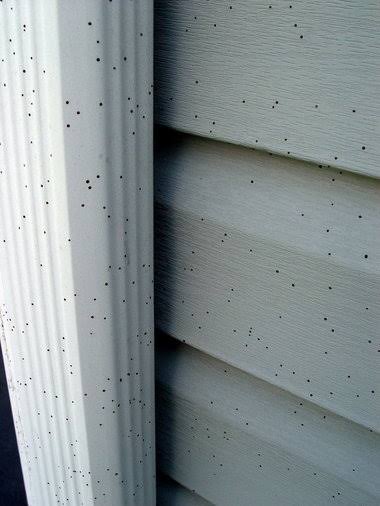
Tiny, firmly attached black specks can be artillery fungus deposits, especially beside wood mulch. They are different from an ordinary film of dirt or green growth. A house wash may clean the surrounding siding while the specks remain. Identify the marks and assess the finish before paying for another wash or trying stronger cleaning.
If your Halifax or HRM home looks cleaner overall but still has pepper-like dots near the garden, the next step is a closer assessment—not automatically more pressure. Yellow Wash’s stain and problem library identifies artillery fungus as a condition where bonded specks may not fully release during soft washing.
What is artillery fungus?
Artillery fungus, Sphaerobolus, grows on decaying organic material. It can eject sticky, dark spore masses toward light, including light-coloured siding and trim. The visible dots are deposits from that process; the nearby mulch or other decaying material may be the source. University of Delaware Extension describes the deposits as extremely difficult to remove once attached. [1]
Clues to photograph before you try cleaning
Look for small, separate dark dots rather than a continuous dirty film. Include the garden bed in your photos, particularly if wood mulch sits beside the affected wall. These are clues, not proof: insect marks, tar, paint splatter and other deposits can look similar.
- Take a wide photo showing the wall, trim and nearby planting bed.
- Take a close photo of a reachable area without scraping the dots open.
- Record when you first noticed them and whether new specks are appearing.
- Tell the cleaner what siding material you have and which products or tools have already been tried.
Photograph from a safe, reachable position. A clear image and the surface history are more useful than a large scraped test patch. If identification remains uncertain, ask for an on-site assessment before agreeing to removal work.
Why a normal house wash can leave the dots behind
Yellow Wash’s house-washing service targets ordinary dirt and organic buildup on compatible exterior surfaces. Treating that buildup does not guarantee that a tightly bonded deposit will detach. A cleaner wall with remaining specks is therefore a reason to review the original scope and the type of mark.
Delaware Extension notes that very fresh material can respond to soap and water before it dries. That is not permission to scrub every siding finish. Older deposits may be much harder to remove, and the material underneath determines which methods are acceptable. [1]
Ask the contractor to separate three outcomes: removing the raised deposit, reducing any remaining mark, and preserving the original finish. A quote promising all three without inspecting or testing the surface deserves further questions.
What should a careful removal assessment include?
| Check | Why it matters |
|---|---|
| Exact surface and finish | Vinyl, painted wood, coated metal and glass have different care requirements. Include any known brand or warranty information. |
| Condition before cleaning | Record fading, chalking, peeling, scratches or earlier cleaning marks so the starting point is clear. |
| Small, agreed test area | Use a compatible method in an inconspicuous location, then inspect the dry result before expanding the work. |
| Achievable result | Agree whether the goal is improvement or removal, what marks may remain and when work should stop. |
| Scope and cost | Confirm whether targeted treatment is available and separately priced. Do not assume it is included in a standard house wash. |
For example, Ply Gem advises testing cleaners in an inconspicuous area and avoiding abrasive cleaners and strong solvents on its siding. Use the instructions for your own product rather than treating one manufacturer’s advice as universal. [3]
Avoid chasing individual spots with blades, abrasive pads or increasingly concentrated cleaner. Do not mix products. If the finish begins changing colour or gloss, stop and have it assessed. For chalky surfaces, read our guide to pre-existing siding oxidation before attempting spot cleaning.
Address the source as well as the wall
University of Maine Extension recommends addressing the decaying material supporting the fungus, such as affected mulch or rotting wood. Changing that source can help reduce further deposits; cleaning the siding alone does not resolve the landscape condition. [2]
- Show the affected bed to your landscaper and discuss whether suspect mulch should be removed or replaced.
- Review nearby decaying wood and consistently damp areas rather than assuming every black mark comes from the same bed.
- Choose any replacement ground cover around the needs of the plants, drainage and property. Do not simply pile on deeper mulch.
- Keep dated photos of the same wall area so you can distinguish remaining old marks from new deposits.
For an autumn cleanup in Halifax, Dartmouth, Bedford or surrounding HRM communities, coordinate the landscape review with the cleaning assessment. Ask who handles each task. Mulch replacement and landscaping should not be assumed to form part of Yellow Wash’s cleaning quote.
Should you book another wash?
If the wall still has ordinary dirt or green buildup, a maintenance wash may be useful. If the main concern is attached black dots, request an assessment first. Discuss any recently completed service with the original contractor and share your photos rather than assuming a repeat visit will produce a different result.
Send us the specks before booking the wash
Use the custom quote option and send Yellow Wash your HRM address, a wide wall-and-garden photo, a close-up, the siding material and details of any previous cleaning. We will review the condition and confirm whether the requested work fits our scope and what result is realistic.