THE YELLOW WASH GUIDE
Restaurant Bin Cleaning: Are You Missing the Concrete Underneath?
A practical guide for Halifax restaurant owners: plan the bins, the pad underneath and the work needed around them.
THE SHORT ANSWER
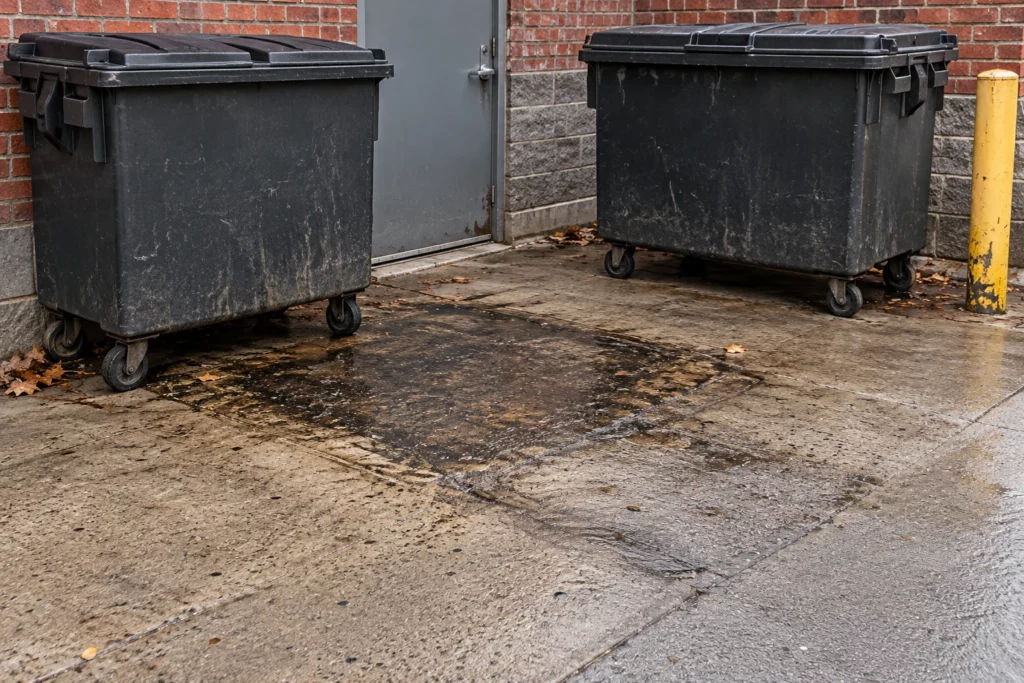
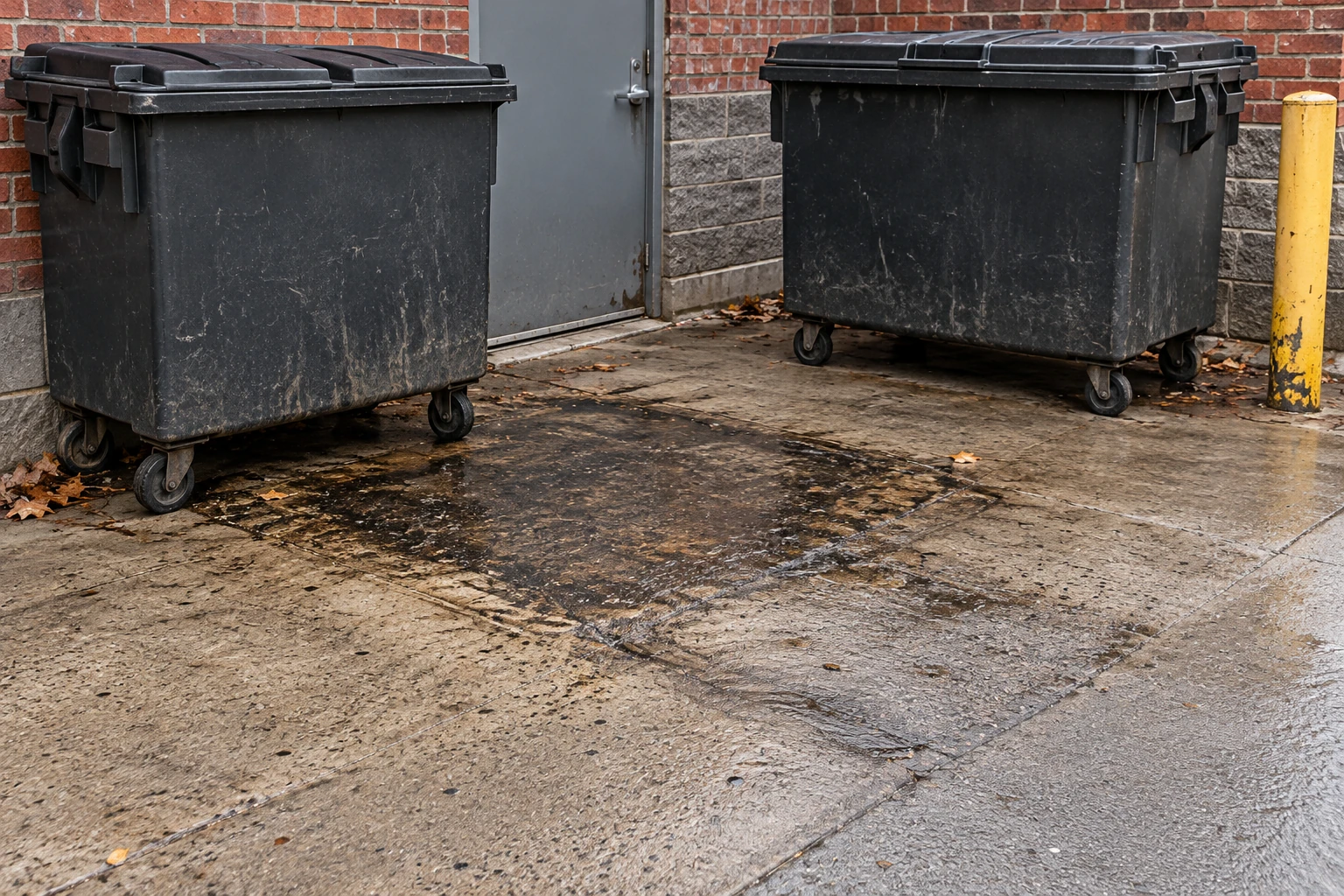
Cleaning the bins alone can leave food residue, grease and dirty wheel tracks on the concrete underneath. A complete restaurant waste-area quote should identify the bins, the pad, nearby splash zones, safe bin movement and wash-water handling. Write each part into the scope before booking.
After collection, an empty bin can still have residue inside, around its lid and on its wheels. The ground may also need attention. For restaurants in Halifax, Dartmouth, Bedford and the wider HRM, treating these as one planned work area makes it easier to arrange access and check the result.
Yellow Wash’s garbage room and waste-area cleaning service covers bin areas and outdoor pressure washing and degreasing. The exact surfaces and any specialist treatments are confirmed in the quote.
Start with the space under the bins
Ask for a wide view of the enclosure and, when a bin can be moved safely by the responsible person, a view of its footprint. Check corners, wheel routes and the wall behind it. The aim is to see which areas need cleaning and which cannot be reached with the bins in their normal position.
Do not assume the cleaning crew can relocate every container. A large dumpster, compactor or damaged wheeled bin may need the waste contractor’s involvement. Confirm ownership, permission and who will move and return it.
What should the cleaning quote include?
Use this checklist when asking for pricing. It describes items to agree, not a promise that every item is included in a standard visit.
| Area or task | What to confirm |
|---|---|
| Bin interiors | Empty containers, interior walls, bottom and accessible corners. Confirm who removes remaining waste before cleaning. |
| Lids and exteriors | Lid undersides, handles, outer walls and accessible wheels. Identify damaged hinges, leaks or other defects beforehand. |
| Concrete underneath | The full agreed footprint, including areas exposed by moving bins. Specify degreasing where appropriate and assess old stains separately. |
| Surrounding area | Mark the edges of the job: nearby concrete, wall splash zones, enclosure corners and the route used to roll bins. |
| Water and access | Water supply, equipment access, isolation of the work area, runoff control and the agreed collection and disposal arrangements. |
| Separate work | List specialist stain treatment, drain work or other extras explicitly. Do not assume waste hauling, bin repairs or grease-interceptor servicing are part of the wash. |
Plan the visit around waste collection
A useful starting point is a service window after the bins have been emptied, before they refill. Confirm the actual pickup time with the waste contractor and leave room for delays. An appointment booked before collection can leave the cleaner unable to reach the bin interiors.
- Arrange access: supply the gate contact, water location and any loading-bay restrictions. Coordinate with the landlord if the area is shared.
- Protect operations: agree how staff, deliveries and food will stay clear of the work area without blocking required exits.
- Plan the return to use: confirm who checks the area and returns the bins. In cooler HRM weather, discuss drying, temperature and any need to reschedule wet work.
Where will the dirty wash water go?
A nearby grate is not permission to send wash water into it. Halifax Water identifies street catchbasins as part of the stormwater system, intended for rainwater runoff. Greasy wastewater needs a site-specific handling plan. [1]
Before work begins, ask how loose waste and grease will be collected, how runoff will be controlled, and where recovered water will be taken. Confirm the proposed disposal route with the property contact and the applicable utility requirements. Do not assume any indoor or outdoor drain is suitable.
Keep used cooking oil in its designated collection system. Nova Scotia’s Food Retail and Food Services Code prohibits disposing of used fryer oil into sewage systems. Exterior pad cleaning also does not replace grease-interceptor maintenance; Halifax Water treats that as a separate responsibility. [2] [3]
What result should you expect?
Agree on removal of accessible residue and buildup across the specified surfaces. Old staining, worn concrete and damaged coatings may still be visible. Ask for a test or separate assessment when a particular mark matters, rather than treating a completely uniform colour as the definition of clean.
At the walkthrough, compare the same areas with the original scope: bin interiors, lid undersides, wheels, the exposed footprint and nearby edges. Record any inaccessible section or stain needing another treatment. A persistent smell also deserves investigation of leaking containers, remaining waste or drainage problems; another wash may not address the source.
How often should a restaurant waste area be cleaned?
Choose a cleaning interval from the conditions you actually observe: leaks, residue, volume of waste and how quickly buildup returns. Check the area between professional visits and adjust the plan when needed. A low-use enclosure and a busy restaurant’s bin area may need different schedules.
Nova Scotia’s Food Services Code calls for waste removal often enough to limit odours and pest-attracting conditions, and for cleaning schedules that prevent residue accumulation. It also requires a written sanitation program. Add the agreed waste-area tasks, responsible person and completed visits to your establishment’s records. [2]
Example wording for your quote request
“Please quote cleaning our empty bins inside and out, including lids and accessible wheels, plus degreasing and washing the marked concrete pad beneath and around them. Confirm who moves the bins, the wash-water plan, any separately priced stains and when the area can reopen.”
Get a complete waste-area cleaning quote
Send Yellow Wash your Halifax or HRM address, photos, bin types and quantities, approximate pad size, collection day and access details. Point out grease buildup or stubborn stains so we can define the work and quote any specialist treatment separately.